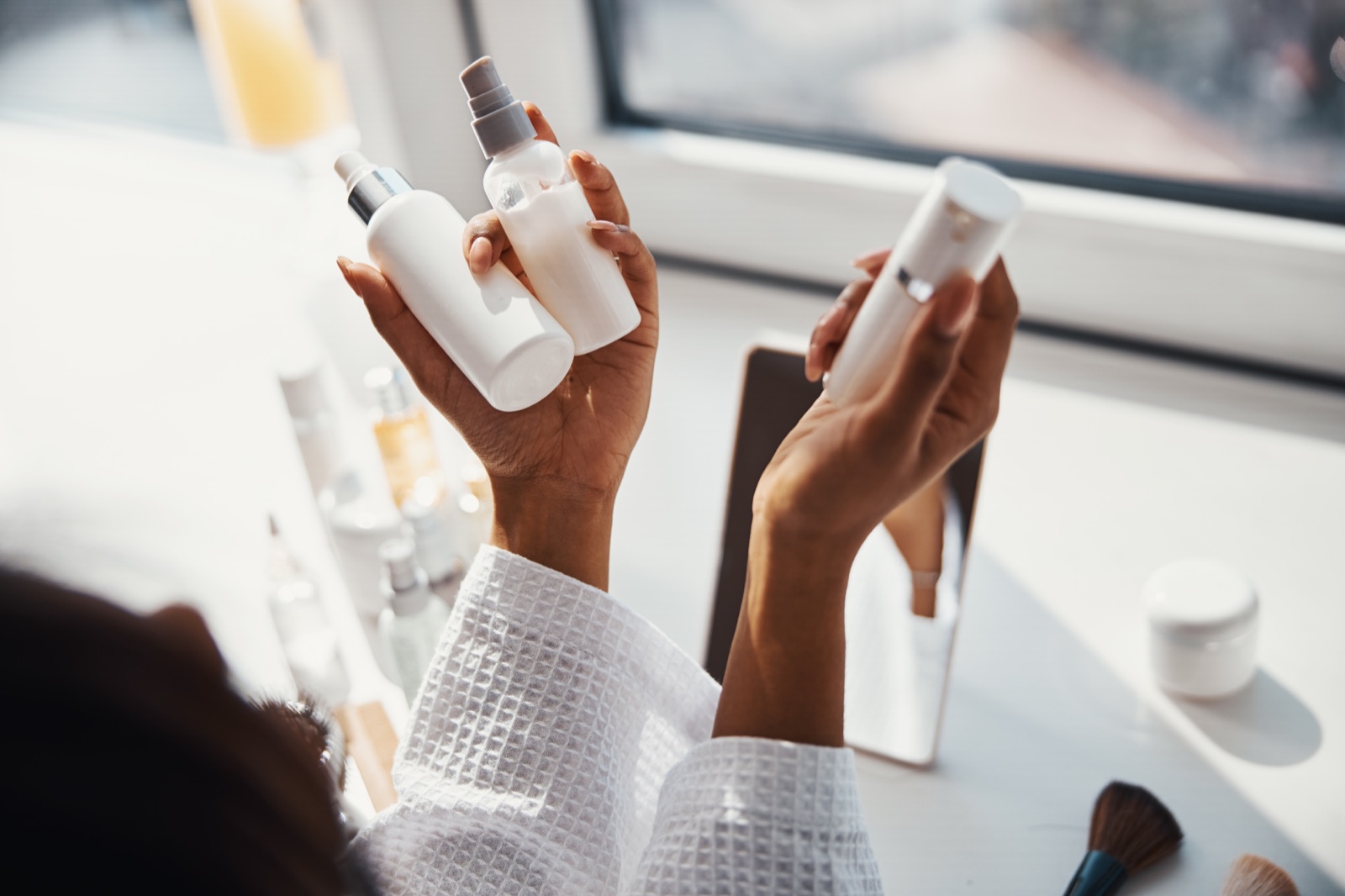
Layering is where a lot of routines stop feeling calm.
You have cleansers, serums, moisturisers, oils, SPF. Morning and night look different. Someone online has a diagram. Someone else has a different diagram. None of those charts quite match the bottles on your shelf.
This is practical clarity for the products you already own: order, what can sit in the same routine, AM vs PM, how to think about products that may not work well together for you, and when to stop layering for a bit.
Oleah is an iPhone companion for your shelf. You log what you use, ask how to use it in your routine, and keep a daily record so you can see what may be helping and what may need changing. Oleah does not sell products and does not take affiliate cuts. That independence matters when the next tip is usually another bottle.
This is not medical advice. It is everyday routine language for people who want fewer mysteries at the sink.
Order: a calm way to think about what goes first
A useful mental model stays simple. Clean first. Then thinner watery layers before richer creams. Then moisturiser. Then SPF in the morning. Oils and thicker balms usually sit near the end at night, if you use them at all.
That model is a starting map, not a law. Brands formulate differently. Some bottles are meant to be used alone. Some are meant to be buffered with moisturiser. When the label gives a clear instruction, follow the label you own rather than a viral chart.
If two products feel sticky, pill, or somehow fight on your face, that is useful feedback. Pause. Note what you used. You do not need a chemistry essay. You need a small observation you can repeat tomorrow.
Keep the order question tied to your actual bottles, not a generic influencer checklist.
What can I use together
"Can I use these together" is one of the most honest skincare questions. It usually means: I like both, I am scared they cancel each other out, and I do not want to waste a week.
Some products are designed to sit in the same routine. Some are better on alternating nights. Some feel fine alone but feel like too much stacked. Your face and your tolerance matter more than a stranger's absolute rule.
When you are unsure, shrink the experiment. Use one question product for a stretch of days while the rest of the routine stays steady. Watch what you can see: comfort, tightness, shine, texture, redness that comes and goes. Progress language stays careful. Visible changes over time. Do not crown a product as the cause. Do not crown it as a failure either until you have given the signal room to show up.
Oleah can help you hold that question without turning it into a shopping spiral. Log both products. Ask one plain question in the app. Keep scanning. Let the week teach you something the comment section cannot.
A label check is not the same as living with a routine. For related reading on ingredient checkers, see Yuka alternatives when the question is about checking products. For whether anything is actually helping, Does My Skincare Actually Work? is the better companion.
AM vs PM: same face, different jobs
Morning and night are not moral categories. They are different jobs.
Morning often means protection and comfort under makeup or daylight. Cleanse if you need it, treat lightly if your skin tolerates it, moisturise, SPF. Keep it repeatable. A morning that takes twelve minutes every day will lose to a morning that takes three minutes you will actually do.
Night often means more margin for things that do not play well with sun exposure instructions on the label, or simply things that feel too rich for daytime. That does not mean night is active chaos hour. It means you have a little more room to notice how skin feels when you wake up.
If AM and PM have drifted into two totally different personalities with no overlap, ask whether you could share a moisturiser or a cleanser across both. Shared anchors make changes easier to see.
Conflicts, avoid together, and staying non-medical
People have been burned by stacking too much, too fast. Stay descriptive.
Some combinations may not belong together for your skin, your formula types, or your tolerance. That is a "may" statement. It is not a diagnosis. It is not a care plan from a clinician. It is not a numbered conflict chart. It is not a named medical conflict pair list.
Practical moves when something feels off after stacking:
- Stop adding new things for a week.
- Return to a shorter base routine.
- Reintroduce one product at a time.
- Note comfort and visible changes without forcing a story about why.
If skin feels sore, cracked, or worrying in a way that is beyond normal dry-day annoyance, step back from DIY stacking and talk to a clinician. Oleah is a companion for routine clarity, not a clinician and not a substitute for one.
Ingredient questions in the app should sound like curiosity: do these two feel like they may not be a good mix in my routine right now? That framing keeps you in observation mode.
When to stop layering
Stop layering when the routine is harder to describe than to do.
Stop when you are using "just one more active" as a way to avoid looking at sleep, stress, or the fact that you changed five things this month. Stop when every night feels like a chemistry set. Stop when you dread the sink.
Stopping does not mean failure. It means you are choosing clarity. A pause week with fewer layers often teaches more than another purchase. If the question is how many products rather than what order, simplify the shelf first and come back to order once the list is quieter.
Routine clarity is not a trophy. It is the feeling that you know what you put on your face yesterday, and you can still recognise your own skin today.
CTA: Go to oleah.skin for a free routine audit. Open Oleah tonight, check your AM/PM list, and ask one question about two products you already own.