
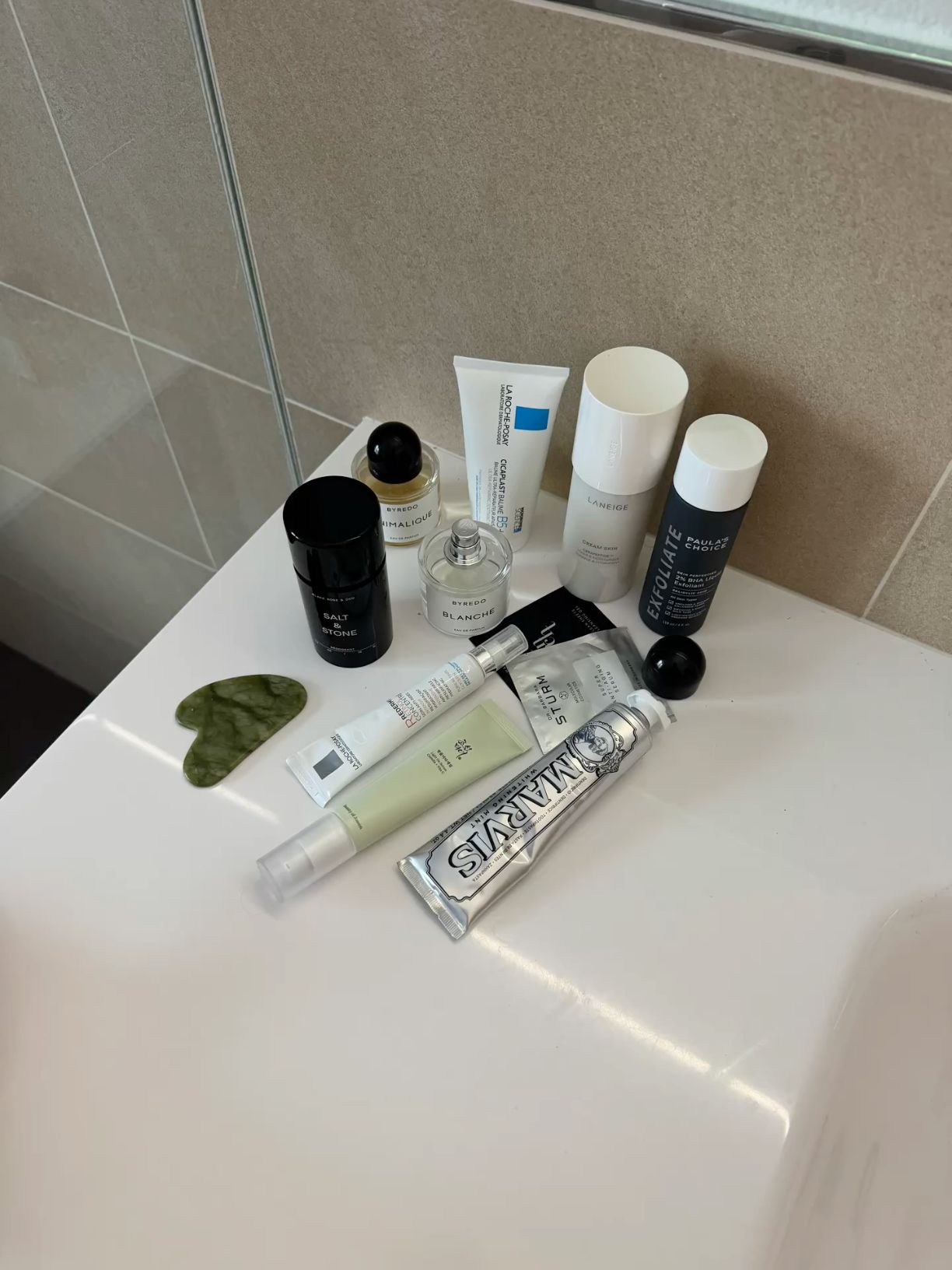
You scan a serum with Yuka, it comes back green, "excellent," and three weeks later you've broken out along your jawline anyway. Nothing about the app was wrong. The ingredient list really was clean by Yuka's standard. The problem is that Yuka's standard has nothing to do with your face specifically, and for skincare that gap matters more than it does for a bag of chips.
What Yuka actually does well
Yuka built its name on making ingredient scanning fast and legible. Scan a barcode, get a score out of 100, checked against a real methodology that flags listed ingredients against known risk categories. The score comes back as one of three colors:
- Green. Good.
- Orange. Moderate concern.
- Red. Avoid.
It covers both food and cosmetics under one app, which is part of why it's become one of the most downloaded scanning apps around, with revenue estimated at roughly $1.2M a month by outside research. When a product scores poorly, Yuka suggests a better rated alternative in the same category.
For a quick gut check on a moisturizer you're about to buy, that's genuinely useful, and it's honest about what it's actually measuring: the ingredient list on the label.
Where it stops, for skincare specifically
The score is about the ingredient list in isolation. It has no idea what your skin actually does when that formula touches it. Two people can scan the same "excellent" retinol cream, one person's skin calms down over a month, the other person's breaks out from week one, and Yuka gives both of them the identical green light before either of them has used it once.
There's no tracking, no photo history, no "is this actually helping you" answer, because that was never the job.
A clean formula can still be the wrong formula for your skin barrier, your climate, or whatever else you're already using it alongside, and no ingredient database can see that from a barcode. It also can't tell the difference between a purge that settles down and a genuine reaction that keeps getting worse, which is exactly the kind of thing you can only catch by actually watching your skin over time. (We wrote up the full method for doing that properly here.)
If you want the "is this working on me" answer, you need a different category of tool, and there are a few real ones worth knowing about.
OnSkin
OnSkin is the closest thing to a direct Yuka competitor built specifically for skincare, haircare, and household products, and it's the volume leader in that lane: 33,045 App Store ratings at a 4.69 average, with the company claiming over 8 million users. Like Yuka, its core mechanism is an ingredient checker: scan a barcode or a product photo and get a science-backed read on the formula.
Its recurring weak spot, based on its own review pattern, is catalog coverage. Users report K-beauty products showing up as not found often enough to be a real problem for anyone whose routine leans Korean or Japanese, and new products can sit pending in the database for months before they're added. If your shelf is mostly Western mass-market brands, this matters less. If it isn't, check before you commit. Paywall complaints show up in roughly a third of its negative reviews (17 of 48 in our sample), which is on the lower end for this category but still worth knowing going in.
- Weekly: $4.99 to $6.99
- Yearly: $29.99 to $39.99
SkinSort
SkinSort adds a layer Yuka and OnSkin don't have: routines and community, letting users check products, build a regimen, and see what other people with similar skin are doing. It's the most recently updated app in this whole category as of this writing (last shipped July 18, 2026), and it has 5,732 ratings at 4.74, the highest average of the three ingredient-checker-style apps here.
The complaint pattern worth knowing about: some users report a product's score changing after they've already bought it, which is an odd thing to have happen to a "checker" and worth watching for if you're relying on the score to justify a purchase. It also has the second highest cancellation-friction rate in the category behind Lovi, at 8 out of 54 negative reviews mentioning it, and paywall complaints show up in 21 of those 54, the highest rate of the three ingredient-checker apps here.
- Monthly: $7.99 to $12.99
- Yearly: $19.99 to $59.99
Thea
Thea is the one that's actually closest to Oleah in ambition, and it's the strongest performer in the category by a real margin: 14,247 ratings at 4.83, the best quality-at-scale of any app in this space, launched April 2025 and still shipping fast. It scans your face, analyzes your routine, recommends products, and offers a path to connect with actual skincare professionals. It also has a teen pricing tier at $19.99 a year, a segment nobody else in this list serves.
Two things worth knowing before you commit:
- Thea recently put a paywall on viewing your own past scan photos, a feature that used to be free, and it's drawn real backlash in reviews from people who feel charged to see their own history.
- Because Thea also surfaces "deals" and product recommendations it may have a commercial stake in, it's worth reading its picks as partly a shopping feature, since the app has some financial interest in what you end up buying.
- Weekly: $1.99 to $9.99
- Monthly: $9.99 to $14.99
- Yearly: $39.99 to $59.99 (teen tier $19.99)
Oleah
Full disclosure: this is our app, and it isn't out yet. TestFlight is live and the public launch is targeted for September 2026, so weigh what follows accordingly. What we're building, plainly: a daily 3D face scan using the iPhone's TrueDepth camera, tracking redness, texture, and tone against your own baseline over time. Rather than scoring a product's ingredient list in isolation, Oleah looks at the products already on your shelf and tells you which ones are actually correlating with your skin improving or getting worse, backed by an in-house catalog of about 177,000 products with full ingredient data.
The part we'd want a skeptical reader to actually check rather than take on faith: Oleah takes no affiliate commission and sells no products. That's built into the business model itself, the kind of thing that can't quietly change later the way a policy could. There's also a Clarity Guarantee behind the tracking claim: proof a product is helping or hurting your skin within 30 days, or your money back.
If you want in before launch, the waitlist is open now.
Side by side
Every claim below is pulled straight from what's written above, restructured so it's scannable in one pass. Where the piece didn't say something about a competitor, the cell says so rather than guessing.
| Dimension | Yuka | OnSkin | SkinSort | Thea | Oleah |
|---|---|---|---|---|---|
| What it evaluates | Ingredient list only (barcode scan, 0 to 100 score plus color) | Ingredient list only (barcode or product photo scan) | Ingredient/product checker, plus routines and community | Your face (scan), your routine, and product recommendations | Your own skin over time, correlated against the products on your shelf |
| Tracks your own skin over time | No. No tracking or photo history | Not described in this piece, framed purely as an ingredient checker | Not described in this piece, adds routines and community rather than skin tracking | Yes. Face scans with history, though viewing past scans is now paywalled | Yes. Daily 3D face scan tracked against your own baseline |
| Commission on recommendations | Not addressed in this piece | Not addressed in this piece | Not addressed in this piece | Surfaces "deals" it may have a commercial stake in, per the article | None. Takes no affiliate commission and sells no products |
| App Store rating | Not stated in this piece | 4.69 (33,045 ratings) | 4.74 (5,732 ratings) | 4.83 (14,247 ratings) | Not out yet. TestFlight live, public launch targeted September 2026 |
| Pricing | Not stated in this piece | Weekly $4.99 to $6.99, yearly $29.99 to $39.99 | Monthly $7.99 to $12.99, yearly $19.99 to $59.99 | Weekly $1.99 to $9.99, monthly $9.99 to $14.99, yearly $39.99 to $59.99 | Not launched yet, no price set |
Picking one
- A fast ingredient gut check before you buy something. OnSkin covers the widest range of product categories, and Yuka still does food alongside it.
- Routines and a community layer on top of the ingredient check. SkinSort's the one built for that.
- An app that scans your actual face today, and you're comfortable with its recommendations carrying some commercial weight. Thea is the strongest product in the category right now, full stop.
None of these four apps are wrong, and none of them are lying about what they do. They're answering different questions than the one most people actually walk in with, which is closer to "is this specific product working on my specific skin" than "is this formula clean" or "what should I buy next." That's the question none of the established players were built to answer, and it's the one we started Oleah to close. If you'd rather see the daily tracking approach for yourself before it launches, the waitlist is the way in.