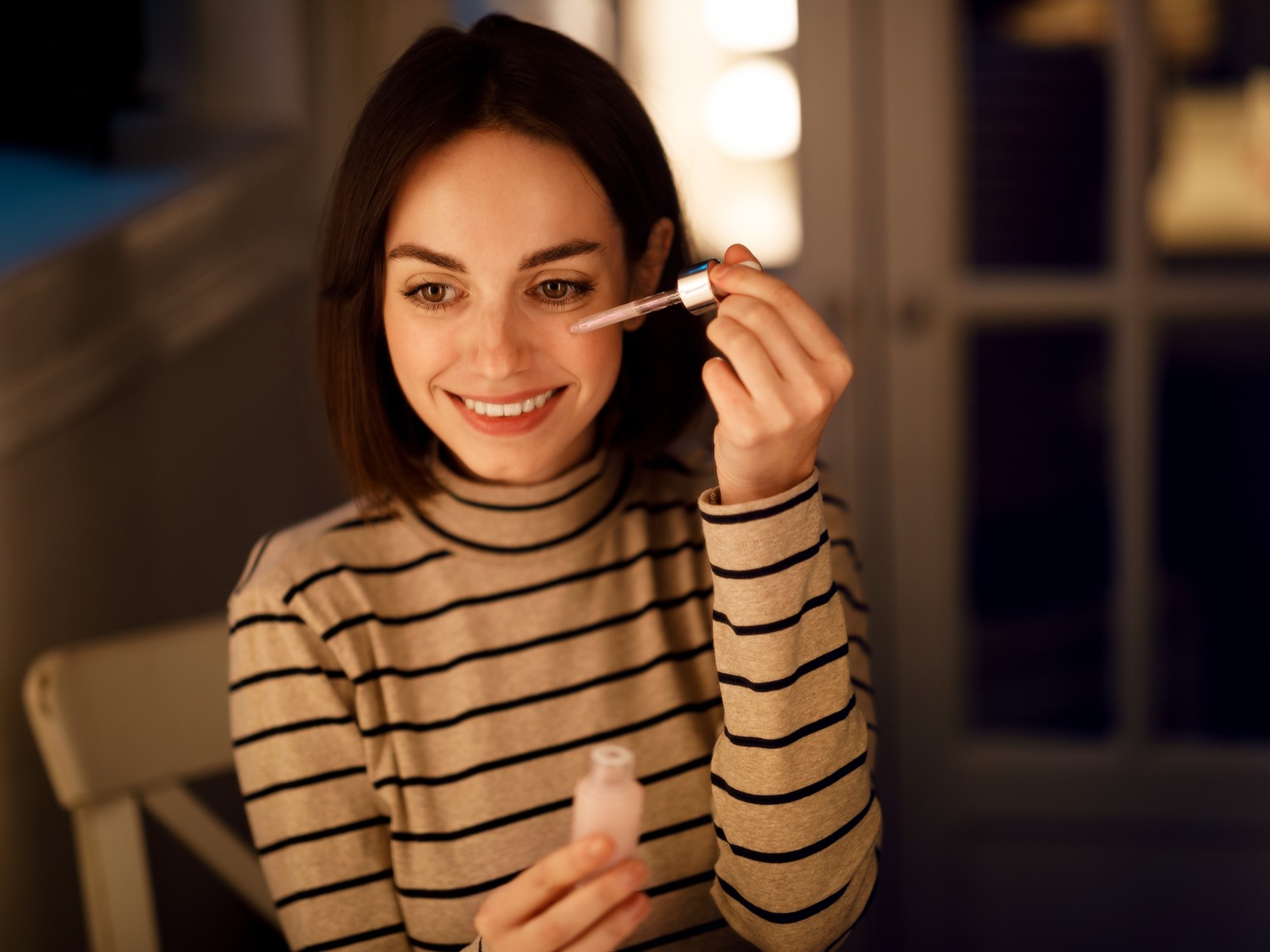

A skincare app helps you keep track of your products, your routine and how your skin looks over time, and many let you ask questions about what you use. Different apps start in different places, so the useful question is which kind of help you want before you download one.
The main things skincare apps do
Most skincare apps do one or more of these jobs.
Look up products and ingredients. You search for a product or point your camera at a label, and the app tells you what's in it and what those ingredients are commonly used for.
Keep a record of your routine. You list what you use in the morning and at night, so it's written down somewhere other than your memory.
Follow how your skin looks. You take photos or quick face scans over weeks, so you can look back at visible changes side by side.
Answer questions. Some apps let you ask about a product, an ingredient or the order you use things in.
Suggest products. Some apps recommend new things to try or help you find similar products.
No single app has to do all of these. Most lean towards one or two.
Starting from what you already own
There's another way to begin. Some apps start from the shelf you already have, before suggesting anything new.
That matters because most of us own more products than we use. A crowded bathroom cabinet, half finished bottles, a serum bought on a whim. An app that starts from those products helps you see your routine as it really is today.
From there it can be simpler to notice patterns. A new product on Monday and tight cheeks by Wednesday. Two steady weeks with a comfortable face.
How to choose a skincare app
- Decide what you want help with. Understanding ingredients? Keeping track of a routine? Seeing changes over time? Write down one or two.
- Look at where the app starts. Does it start with a face scan, a quiz, a product search, or the products you already own?
- Check what it asks of you. Daily photos, weekly check-ins, or nothing regular. Pick something you'll actually keep up.
- Read how it describes itself. Look at the App Store page and the app's own website. Notice whether it sells products or recommends them.
- Read the privacy policy. Especially if the app uses photos of your face.
- Try it for a couple of weeks. Then decide whether it fits how you like to look after your skin.
What a skincare app can't do
A skincare app isn't a replacement for a dermatologist or doctor. If your skin is irritated, sore or itchy and it keeps going, see one in person.
An app also can't make a product work faster. Patch testing and adding one new product at a time still matter, whichever app you use.
If you'd like a side by side look at three apps people often search for, we compared what each one is for and how it works. And if you'd rather be your own skincare ingredient checker, start with the label.
Where Oleah fits
Oleah is an iPhone skincare companion that starts from what you already have. You add the products on your shelf or in your routine, take quick face scans to follow visible changes over time, and ask questions along the way. It can flag products that may not belong together. It does not diagnose or treat, and it does not sell skincare.
Skincare app FAQ
What does a skincare app do? It helps you keep track of your products, your routine and how your skin looks over time. Many also answer questions about ingredients and products.
What is an AI skincare app? An app that uses AI to answer questions about products, ingredients or your routine, or to describe what changes in your photos. It can't diagnose anything. If something worries you, see a dermatologist or doctor.
What is a skincare scanner app? Usually an app that reads a product's label or barcode and explains the ingredients. A face scan app or skin tracker app is different: it keeps a visual record of your skin over time.
Do skincare apps tell you your skin type? Some ask questions or use photos to suggest one. You can also work it out yourself by watching how your face feels over a couple of weeks. How do you tell your skin type? walks through it.
Can a skincare app replace a dermatologist? No. If irritation keeps going, see a dermatologist or doctor.