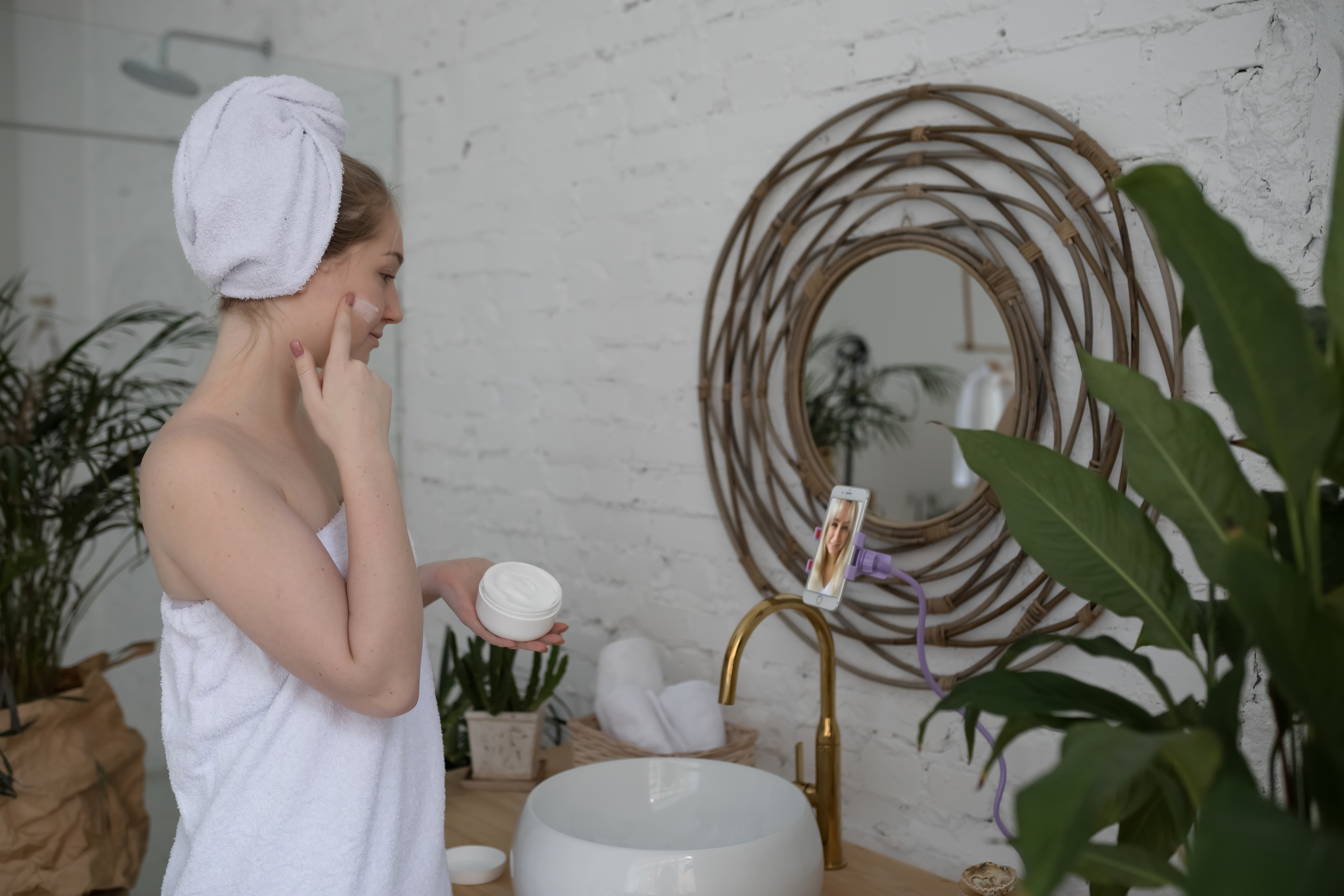
Skin cycling is a night-time routine that spreads your stronger products across a few evenings, so you're not using them all at once. The version most people mean runs over four nights: one night for an exfoliant, one for a retinoid, then two plain recovery nights before you start again.
Why people like skin cycling
Plenty of us own an exfoliating acid and a retinol, and end up using both most nights. Then the moisturiser stings on the cheeks and we can't tell which bottle is the problem.
Skin cycling puts some space between them. Each night has one job, so you always know which product came out of the cabinet and when. That alone takes a lot of the guesswork out of a crowded shelf.
The other draw is the recovery nights. Those are cleanser and moisturiser and nothing else. For a lot of people, those are the nights their skin feels most comfortable. You'll see it written as skincycling too, all one word. It's the same idea.
What a skin cycling routine looks like
Here's the common four-night version.
Night one: exfoliate. Cleanse, pat dry, then use a chemical exfoliant you already own, such as a lactic, glycolic or salicylic acid product. Follow with moisturiser.
Night two: retinoid. Cleanse, let your skin dry fully, then apply your retinol or other retinoid. Moisturiser on top.
Nights three and four: recovery. Cleanse and moisturise. A simple hydrating serum is fine if you like one. No acids, no retinoids.
Then you go back to night one.
Mornings stay simple. A gentle cleanse or a rinse, moisturiser, and sunscreen. Sunscreen is worth keeping up every day when you use acids and retinoids at night.
How to start a skin cycling routine
- Look at your shelf first. Find the exfoliant, the retinoid and a plain moisturiser you already have. You may not need to buy anything.
- Patch test anything new. Put a small amount on one small area, like along the jaw or behind the ear, for a few evenings before it goes on your whole face.
- Start slower than the plan. If you've never used a retinoid, try it once a week at first, or add an extra recovery night. Introducing actives slowly gives you room to see how your skin responds.
- Keep everything else the same. Skip the new serum this month. If three things change at once, you won't know which one your skin is reacting to.
- Check in the next morning. Pay most attention after night two. Tightness, flaky patches or a sting when you wash are signs to slow down.
- Adjust the rhythm to suit you. Some people run a five or six night cycle with more recovery nights. There's no rule that says it has to be four.
When to ease off
If a product stings and the feeling hangs around, stop the actives and stay on recovery nights until your skin feels comfortable again. Then bring things back one at a time, more slowly.
If irritation keeps going, see a dermatologist or doctor. That's a plain safety step, and they can look at your skin properly.
A few things people get wrong
Using two exfoliants on night one. One is plenty.
Using recovery nights as a chance to try something new. Keep them boring on purpose.
Skipping moisturiser on retinoid night because the retinol "needs to work". Moisturiser on top is normal.
If your shelf is crowded and you're not sure what belongs on which night, it helps to read Active Ingredient Layering and Routine Clarity. And if the whole routine feels like too much right now, When Your Routine Feels Like Too Much is a good place to step back.
Where Oleah fits
Oleah is an iPhone skincare companion. You add the products in your routine, use quick face scans to follow visible changes over time, and ask questions about your skin or products as they come up. It can flag products in a routine that may not belong together. It does not diagnose or treat, and it does not sell skincare.
Skin cycling FAQ
What is skin cycling in simple terms? A rotation of night-time products. One night exfoliant, one night retinoid, then recovery nights with just cleanser and moisturiser.
Is skin cycling good for sensitive skin? The rest nights can make it a gentler way to use actives. Sensitive skin may still need a longer cycle, a patch test first, and a slow start.
Can I do skin cycling without retinol? Yes. You can run an exfoliant night followed by recovery nights, or a retinoid night followed by recovery nights. Use what suits your skin and your shelf.
What should I use on recovery nights? A gentle cleanser and a moisturiser you know your skin likes. Leave the acids and retinoids in the cabinet until the cycle comes round again.